Ida Scudder

1. EARLY LIFE
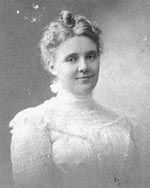
Ida Sophia Scudder was born in Ranipet, Tamilnadu, to Dr. John Scudder and his wife Sophia, part of a long line of medical missionaries that started with Ida’s grandfather, Rev. Dr. John Scudder Sr. When she was five, her parents took Ida to America for her education and returned to India. Ida was happy as she had vowed that she would never come back to India as a missionary like her parents and grandparents! She expected to get married and settle down in the US.
When she was studying at Northfield Seminary she got word from her father that her mother was unwell. So Ida came to India in 1892 and was helping her parents.
2. CALL TO MISSION
In 1894 she received her call, that famous “three knocks in the night.” A Brahmin gentleman came to save his young wife who was struggling in childbirth. Then, only a teenager with no medical training, she could offer no help – but the man refused to allow her doctor-father to come near his wife: “it would be better that she died than be seen by a man”. On that same night, two other men came to her parents’ bungalow with the same request and departed with the same sad response. The next morning, she was shocked to learn that all three mothers and their babies had died – all for want of a lady doctor. She gave up plans of marriage and comfortably settling in America; instead threw herself into medical training.
3. CONTRIBUTION
Graduating from Cornell University Medical School in the first batch open to women returned to Vellore in 1900. For two years she treated woman patients in her father’s bungalow. Then she started a tiny clinic - just one bed with a window through which medicines were dispensed. In 1902, she opened the 40-bedded hospital, with the money she raised in America. She performed her first operation with no helper but the butler’s wife. In the next year, with a small band of dedicated helpers, she saw over 6000 patients and conducted 40 surgeries. By 1906, the number of patients she treated annually had risen to 40,000. In 1923, again with the support of many denominations, she built a larger hospital.

She was mindful of the rural population; she would take out bullock carts, carrying nurses and medicines, and hold 'roadside clinics' at the nearby villages. Right from the beginning, Ida knew that she needed to train women to help women. Initially, it was compounders and nurses.
She brought new hope and dignity to women in South India, giving them the benefits of modern medicine overcoming cultural barriers. She started to train compounders in 1903 and began formal nurse training in 1909. This was an almost unheard-of procedure in Asia. Her nursing school grew to become the first graduate school of nursing in India.
Ida Scudder realized that she would be foolish to go on alone in her fight to bring better health to South India’s women, so she decided to open a medical school for girls.
In 1918, with the help of women of many denominations, she opened the Missionary Medical School for Women in Vellore, with seventeen girls, all taught by herself, which offered the LMP (Licensed Medical Practitioner). Skeptical men said she would be lucky to get three applicants; actually, she had 151 the first year (1918). When it came to the first years of academic teaching, she had to go back to her basic textbooks and constantly study to keep ahead of her students.
Nevertheless, she recognised the value of research and both published papers herself and encouraged others to do so. In 1942 this was upgraded to a full MBBS degree course, and men were admitted from 1947 onwards. The Nursing School became the first College of Nursing in India in 1946 and is now a WHO collaborating centre for Nursing and Midwifery.
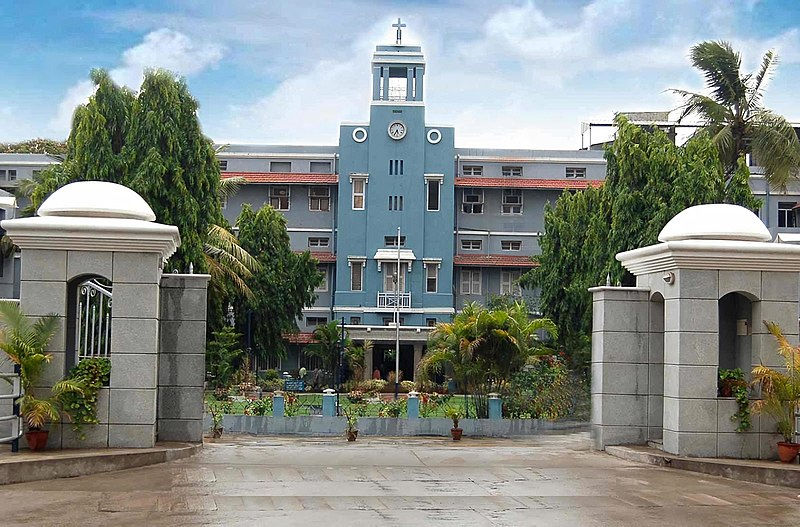
In 2003 Christian Medical College, Vellore was the largest Christian hospital in the world. The hospital has grown into a 3000-bedded multi-specialty healthcare system spread over six campuses, encompassing a range of services from super-specialties to community programmes. Today, CMC is one of the top-ranked educational, healthcare, and research institutes in India.
4. CHALLENGES
The first challenge she faced and overcame was her vow not to become a missionary. Much later, new regulations by the Indian government threatened to end her work, in 1941, but she travelled the length and breadth of the United States raising many, enlisting new leadership with advanced degrees, securing the necessary upgrading of both College and hospital.
5. LEGACY
She opened up the health care professions to women from all faiths and backgrounds, encouraging families to allow their daughters to train as nurses and doctors and showing by her own example and her students’ achievements that women could equal men both in medical studies and clinical proficiency, and excel in leadership even in the toughest of times.
She tried to make sure that CMC was at the forefront of introducing new treatments and acquiring the latest equipment. Her commitment to improving the quality and effectiveness of medical practice has resulted in CMC Vellore being one of the leading medical research institutes in India.
During her lifetime she saw CMC become one of the largest in Asia, the departments grew to include radiation-oncology, thoracic surgery, nephrology, leprosy surgery and rehabilitation, rural work, mental health, ophthalmology, and many others — a list of “firsts” in India commensurate with her abounding energy, indomitable will, and consecrated purpose.
For her tremendous and tireless service, Ida Scudder received the Kaiser-i-Hind medal in 1920. Even after her retirement in 1945, Ida continued to inspire and support the leadership. Her name was a famous one in India and her letters reached her addressed simply, “Dr. Ida, India.”
Ida inspired young medical professionals to take the words of Jesus as their motto - “not to be served but to serve.” Many of her graduates dedicated their lives to serve remote areas of India.
Reference


Comments